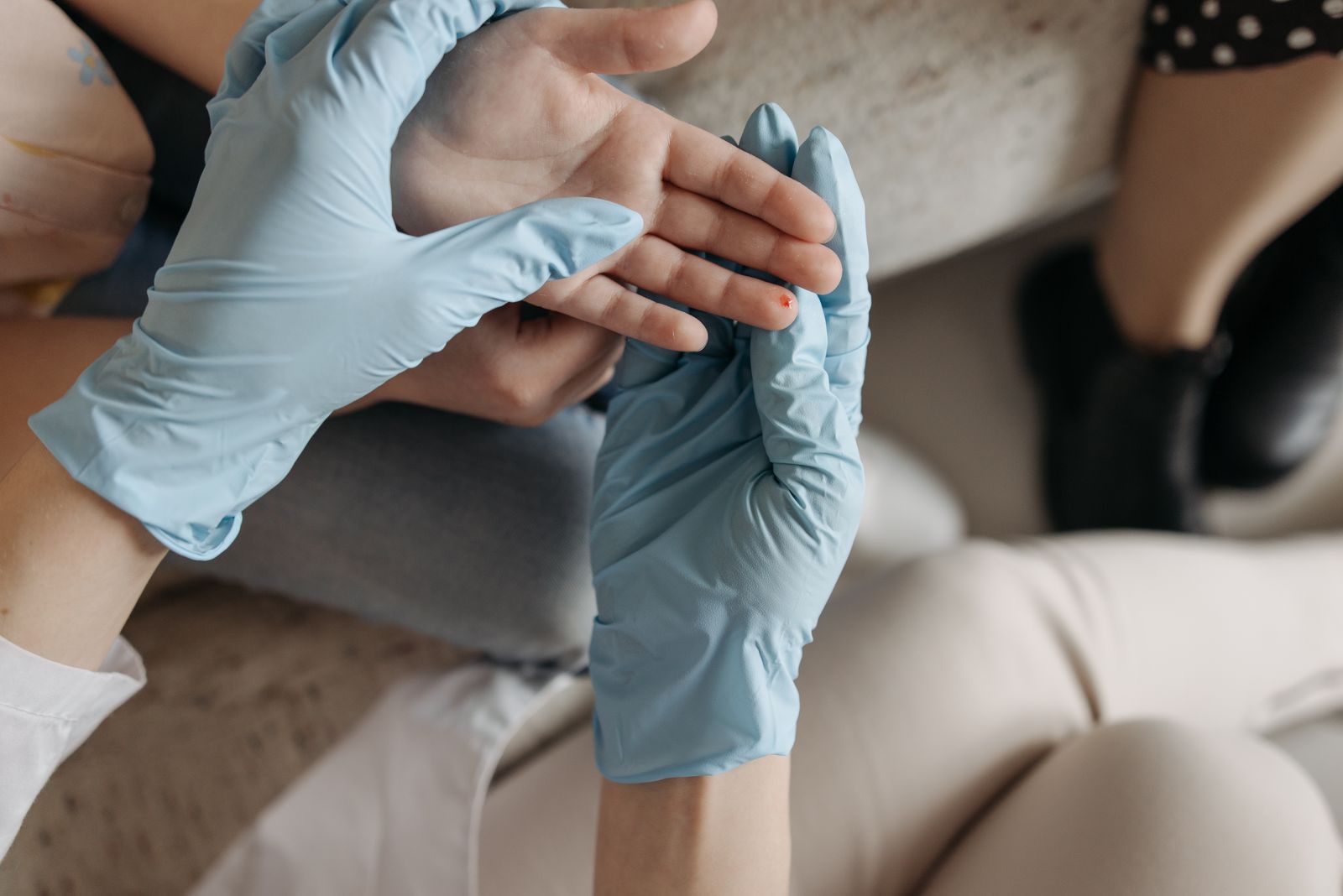
The first question people ask when they arrive with a cut is whether it needs stitches. It is the right question, but it is not the first one we answer. Before closure method comes a shorter list: is anything important damaged underneath, how long ago did this happen, and how dirty is it.
Those three answers decide almost everything else. Here is the reasoning we actually use in the room.
First, what is underneath
Every laceration gets a neurovascular and tendon examination before a drop of anaesthetic goes in, because anaesthetic makes the examination unreliable. On a hand that means testing each finger's ability to bend at both joints independently, checking two-point discrimination on each side of the fingertip, and looking at capillary refill.
If a tendon is partly cut, the finger still moves. That is the trap. A partial tendon laceration that is closed over and sent home can rupture completely a week later, which turns a twenty minute repair into surgery. If we cannot confidently exclude tendon involvement, the wound goes to a hand surgeon, not into our procedure room.
Second, how long ago
Bacteria multiply in an open wound. Closing a wound seals them in. The practical compromise, sometimes called the golden period, is that clean wounds on the trunk and limbs are usually closed within about six to twelve hours of injury.
The face is the exception, and the reason is blood supply. Facial tissue is so well perfused that infection risk stays low much longer, so facial wounds are often closed up to around 24 hours after injury. Past the window, we clean and dress the wound and let it heal from the base, which leaves a wider scar but a far lower chance of an abscess.
Third, how dirty
Irrigation does more for infection risk than any antibiotic. We use normal saline at pressure, roughly 50 to 100 millilitres for each centimetre of wound length, and we explore the wound for grit, glass and fragments of clothing before closing.
Some wounds are never closed primarily regardless of timing. Puncture wounds, most animal and human bites, and anything grossly contaminated are cleaned, dressed and reviewed. The classic example is a cut over a knuckle from a punch that connected with someone's teeth: a fight bite inoculates the joint with mouth flora, needs antibiotics that cover Eikenella corrodens, and is a hand surgery problem far more often than people expect.
Then the closure method itself
Once a wound qualifies for primary closure, the choice between sutures, staples and adhesive comes down to tension and location.
- Sutures suit almost anything. Non-absorbable nylon for skin that will be removed, absorbable material for deep layers and for children where removal would be traumatic.
- Staples are fast and excellent on the scalp, where speed matters, cosmetic outcome is hidden by hair, and the tissue is thick.
- Skin adhesive works beautifully on clean, straight, low-tension wounds whose edges already sit together. It is a bad choice over a joint, on the hands, on mucosal surfaces, or on any wound that gapes when you relax.
- Adhesive strips alone suit superficial wounds and fragile skin in older adults, where tight sutures simply tear through.
Removal timing, which people get wrong
Sutures left in too long leave the cross-hatched marks people call railroad tracks, and it happens fastest on the face. Removal timing is by site, not by how the wound looks: face at four to five days, scalp and trunk at seven to ten, arms and legs at ten to fourteen, and anything crossing a joint at fourteen.
Come back to any QuickCare clinic for removal. If we placed them it is free, and if someone else did it is a flat charge. We would rather take them out on time than see the scar in six months.
And tetanus, every single time
It is the easiest thing to forget and the cheapest thing to fix. For a clean minor wound, a tetanus booster is due if your last one was more than ten years ago. For a dirty, deep or puncture wound the interval drops to five years. If you have had fewer than three doses in your life, or you genuinely do not know, we vaccinate and consider immune globulin for a contaminated wound.
What to take away
- The examination happens before the anaesthetic, because anaesthetic hides tendon and nerve injury.
- Clean trunk and limb wounds are usually closed within 6 to 12 hours; facial wounds often up to 24.
- Adhesive is for clean, low-tension edges, never over joints or on hands.
- Removal timing is set by body site. Face at 4 to 5 days prevents most visible scarring.
Call 911 instead, right now, for any of these
- Chest pain or pressure, especially spreading to the arm, jaw or back
- Sudden face droop, arm weakness or slurred speech: act FAST and call 911
- Trouble breathing, or being unable to speak a full sentence
- Heavy bleeding that will not stop with firm pressure
QuickCare is an urgent care clinic. We do not treat life-threatening emergencies, and we will call an ambulance for you if you arrive with one.
General information only, not medical advice. It cannot replace an examination, and it does not create a provider and patient relationship. If this is a medical emergency, call 911.